Latest posts
-
Gate Leakage Explained: Powerful VLSI Interview Guide
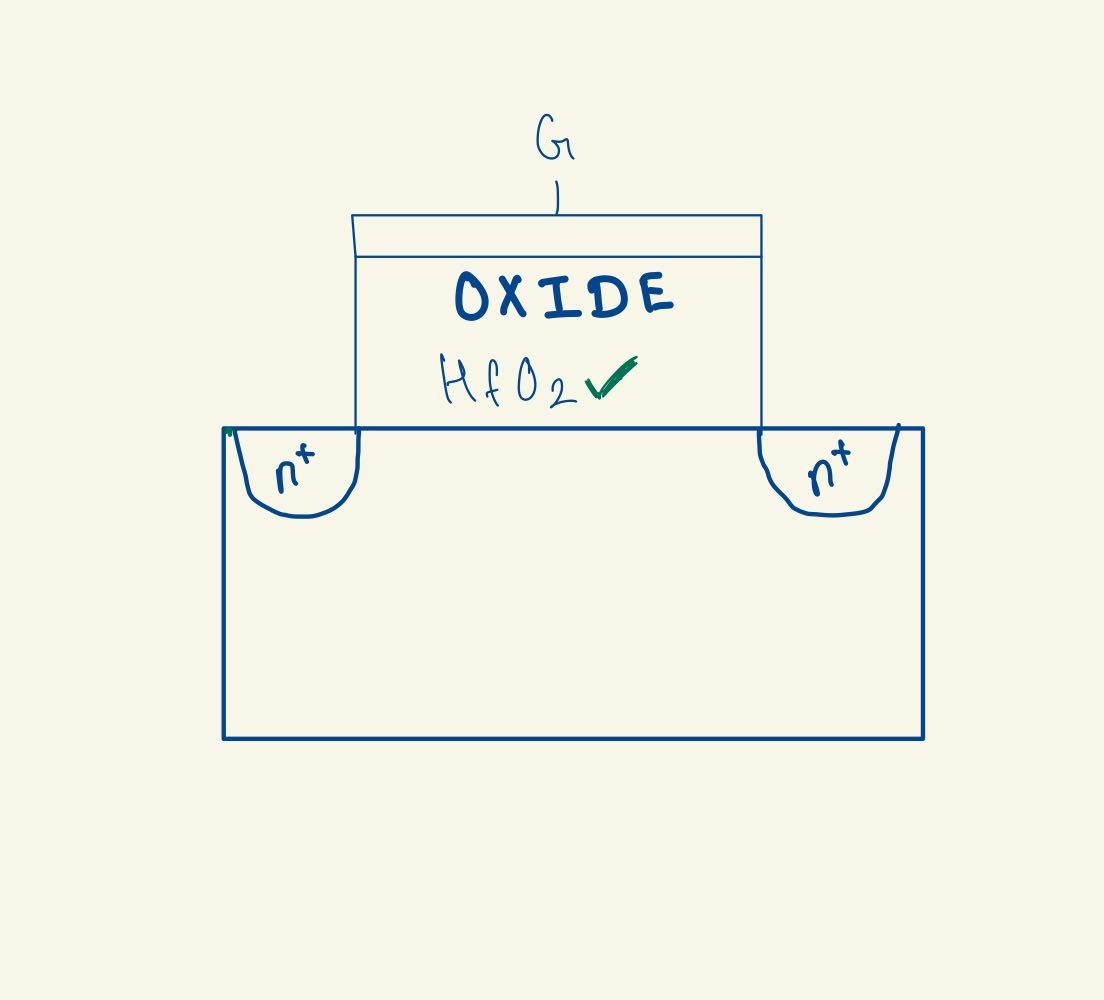
Hi All, What’s gate leakage in MOSFET? The next topic for today is gate leakage. As we’ve seen, for better Performance we do scaling, and with scaling come some short-channel effects and leakage. This is one of the important concepts of leakage. Gate Leakage due to Quantum Tunneling With reduced size of MOSFETs, the body,…
-
GIDL & Subthreshold Leakage in MOSFETs: A Complete Guide for VLSI Interviews
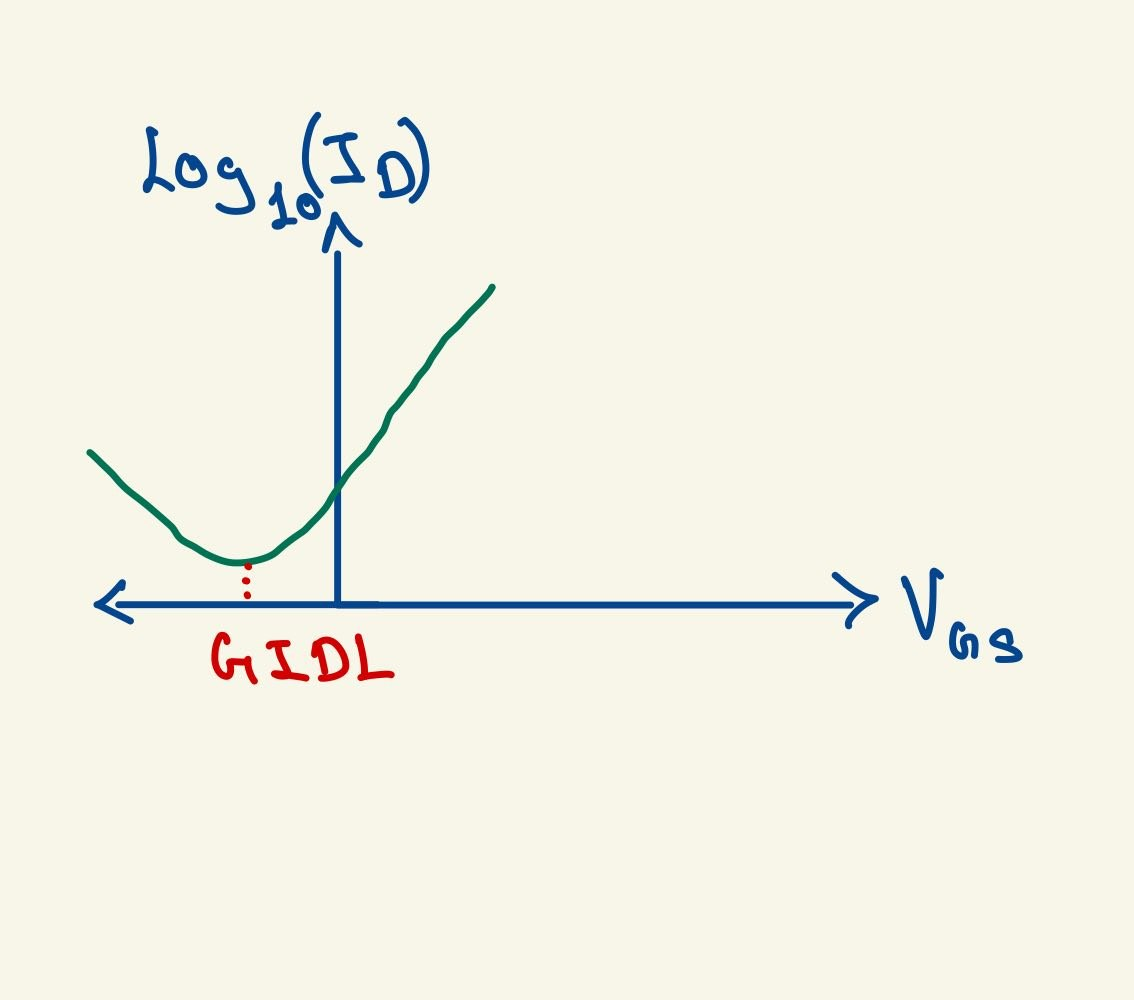
DIBL & SUB THRESHOLD LEAKAGE – SHORT CHANNEL PROBLEM Hi Everyone, The next topic today we will learn about is sub threshold leakage. Now, as for short channels, we’ve brought the drain and source closer to each other so much, and the channel is so narrow, that there is a problem of subthreshold leakage. In…
-
The Ultimate Guide to DIBL Short Channel Effects with VLSI Interview Guide
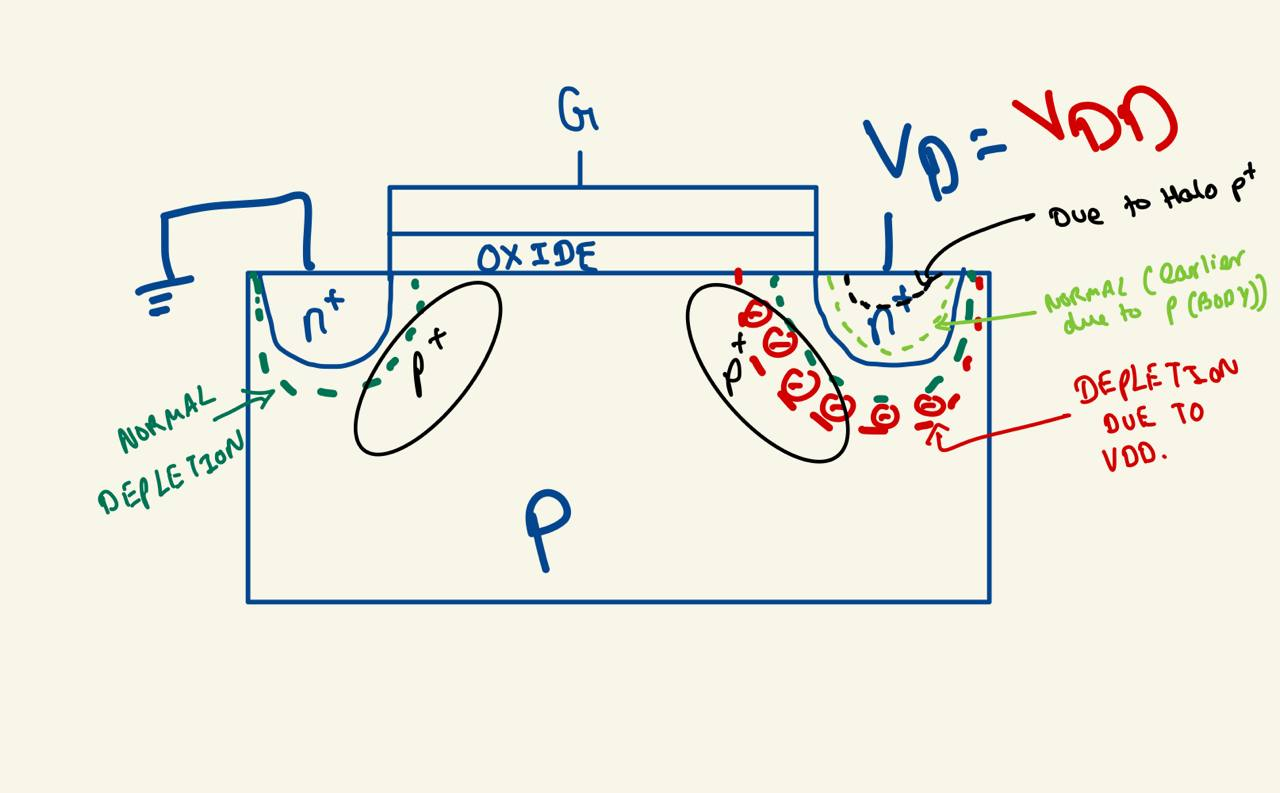
Now we’ll move towards the next important Short Channel Effect, which is DIBL called Drain Induced Barrier Lowering. What Happens as Channel Length Reduces? As we bring Drain and Source closer, the channel length reduces, due to which the Drain starts having more influence over the channel and this can reduce the Vt. (Click here…
-
Velocity Saturation in VLSI Explained for Interviews
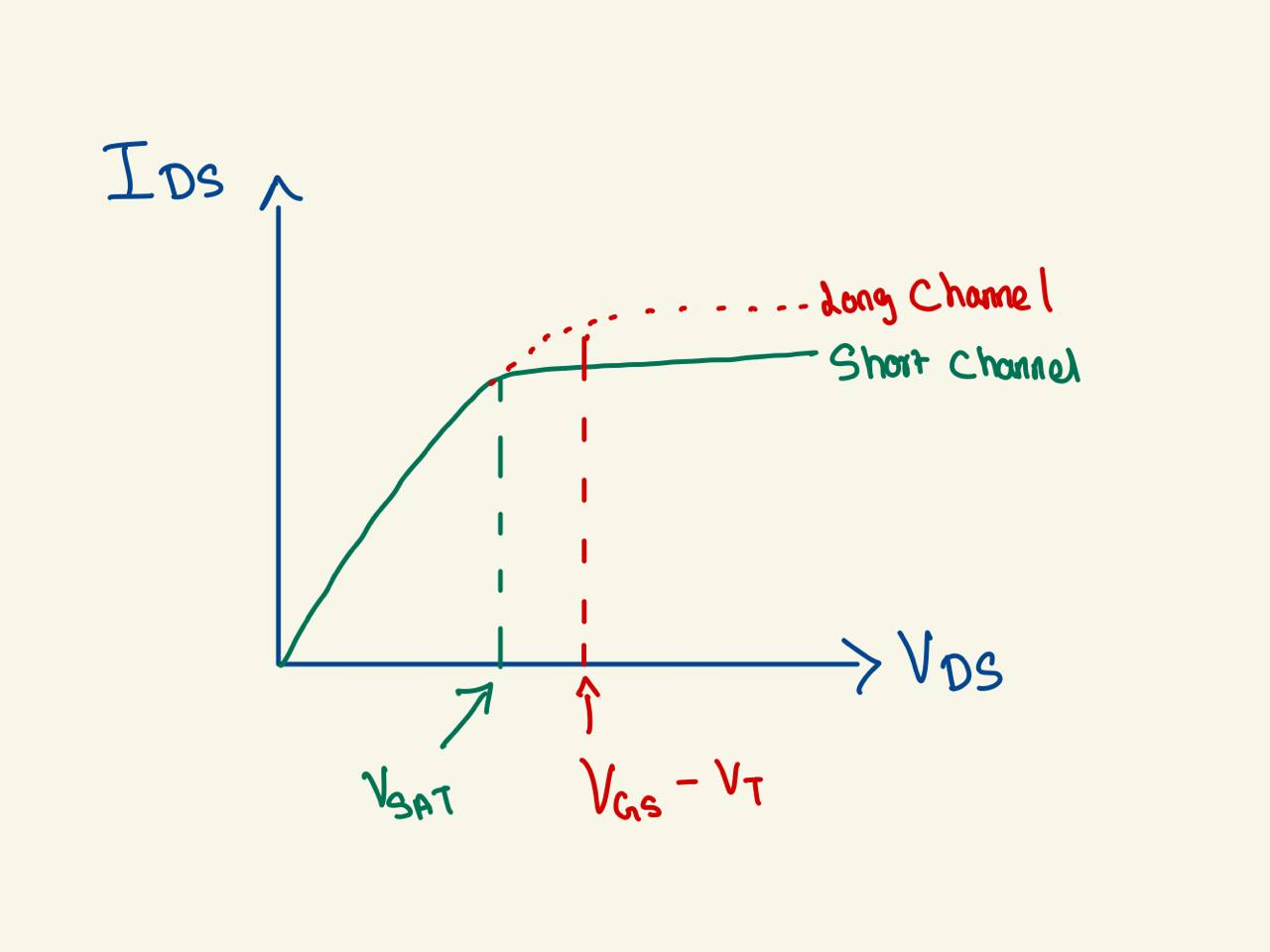
In this topic, we’ll learn about a Short Channel Effect called Velocity Saturation in simple terms. Now, E = Vds/L Here, as the channel length L decreases, the electric field increases for the same Vds. This increase in electric field leads to an increase in electron drift velocity, which in turn increases the scattering of…
-
The Complete VLSI Basics Guide to Channel Length Modulation for Interviews
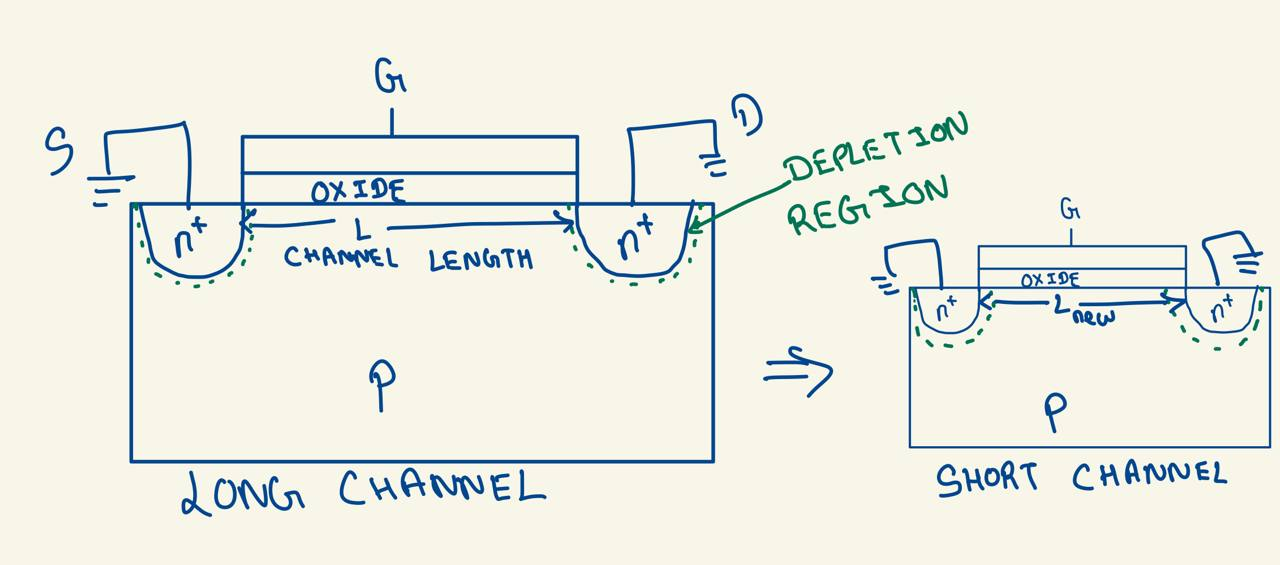
Now we will move towards a very interesting topic called CLM – Channel Length Modulation. In this, we will bring the Drain and Source closer. In older tech nodes (long channel), we used to ignore the effect of the depletion region because the channel length was long. But in short-channel devices, the channel is so…
-
VLSI Basics: Body Biasing Interview Questions Explained
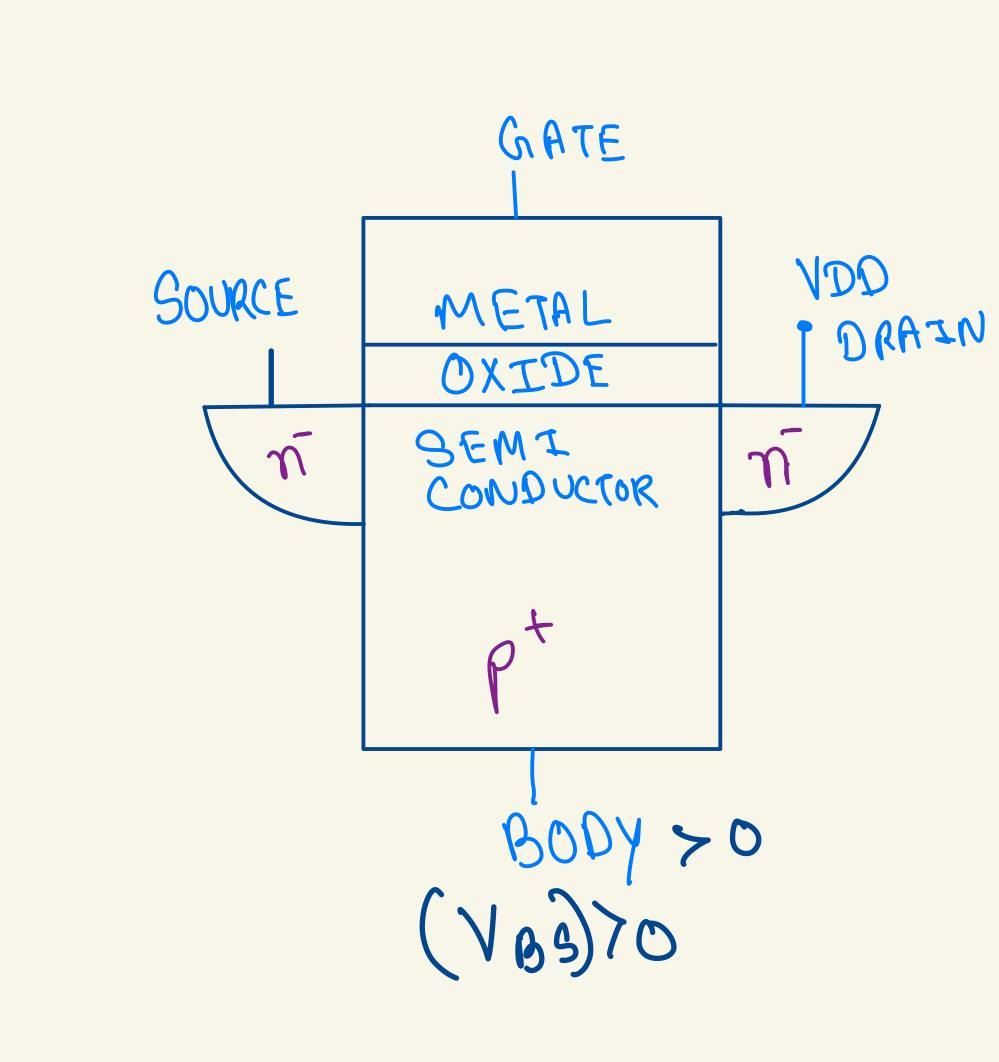
Hi VLSI Readers, welcome to the blog, as we’ve completed the Drain current. We’ll move to next topic of Body Biasing. The word body biasing itself tells us that we’re biasing the body rather than tying it up with source. We’re taking example of NMOS here. What happens if we don’t ? We apply positive…
-
Drain Current Made Simple: Essential VLSI Interview Questions You Must Know
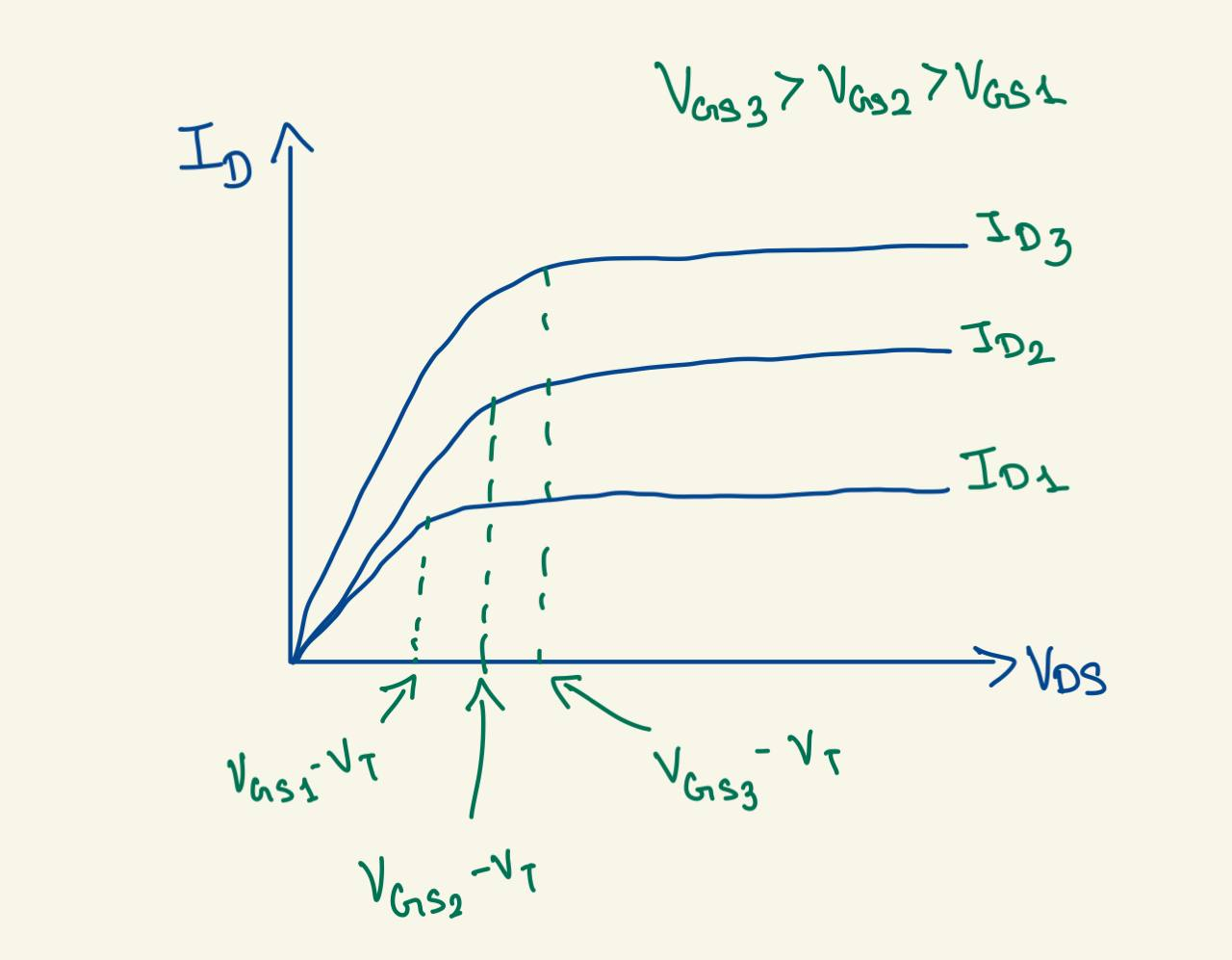
Hi All, As we’ve learnt about channel formation and MOSFET working. We’ll now move ahead with a very important concept of Drain current and its behavior. Note: This explanation primarily focuses on modern short-channel MOSFETs used in today’s technologies. Some behaviors differ slightly from the classical long-channel MOSFET model taught in textbooks. And we’ll also see a very…
-
MOSFET Made Simple: Working, Depletion, Inversion & Interview Questions
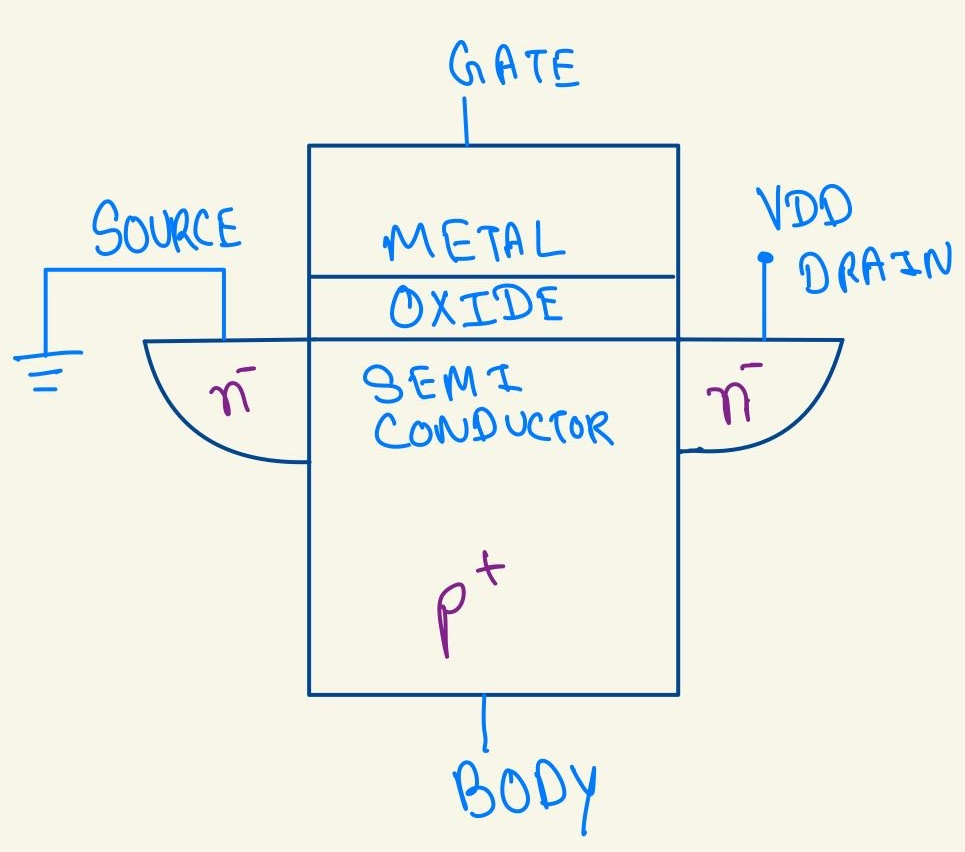
MOSFET Diagram: Working: 1. VGS = 0 No inversion channel exists between the source and drain, so ideally no drain current flows (ignoring leakage currents). Electrons and holes still exist in the semiconductor, but they do not form a conducting path. 2. VGS > 0 3. VGS > Vth (Threshold Voltage) 4. VGS < 0…
-
Understanding VLSI Design: A Comprehensive Overview
What is VLSI? Very Large Scale Integration (VLSI) is a technology that allows the integration of thousands of transistors on a single semiconductor chip. This advancement is pivotal in enabling the miniaturization of electronic devices while enhancing performance and functionality. VLSI technology is fundamental to the development of microprocessors, memory chips, and various digital circuits.…
-
Understanding VLSI: Key Concepts and Applications
Introduction to VLSI Very-Large-Scale Integration, or VLSI, is a technology that enables the integration of thousands of transistors on a single chip or a silicon wafer. This innovation has paved the way for advances in various electronic devices, from smartphones to supercomputers, making them more powerful and efficient. Key Components of VLSI Technology The heart…