Hi All,
What’s gate leakage in MOSFET?
The next topic for today is gate leakage.
As we’ve seen, for better Performance we do scaling, and with scaling come some short-channel effects and leakage. This is one of the important concepts of leakage.
Gate Leakage due to Quantum Tunneling
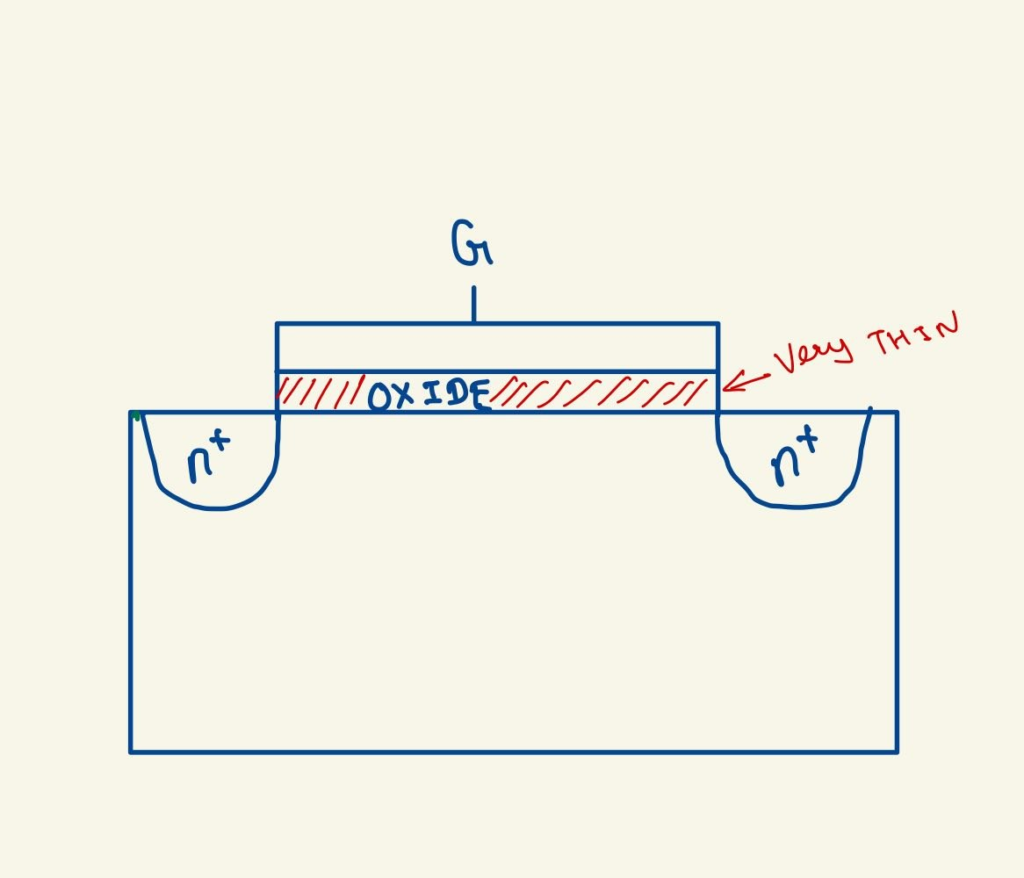
With reduced size of MOSFETs, the body, gate, and everything starts to shrink. With that, the oxide layer between gate and body also becomes thin. This results in a phenomenon called the tunneling effect.
So the primary goal of that insulator (oxide) was to prevent the current directly from gate to body. But now, due to thin oxide and in turn tunneling effect, electrons can tunnel through the thin oxide, creating gate leakage.
It’s not simply oxide is thin enough; it’s actually a quantum tunnelling mechanism.
Why can’t we simply increase gate oxide thickness?
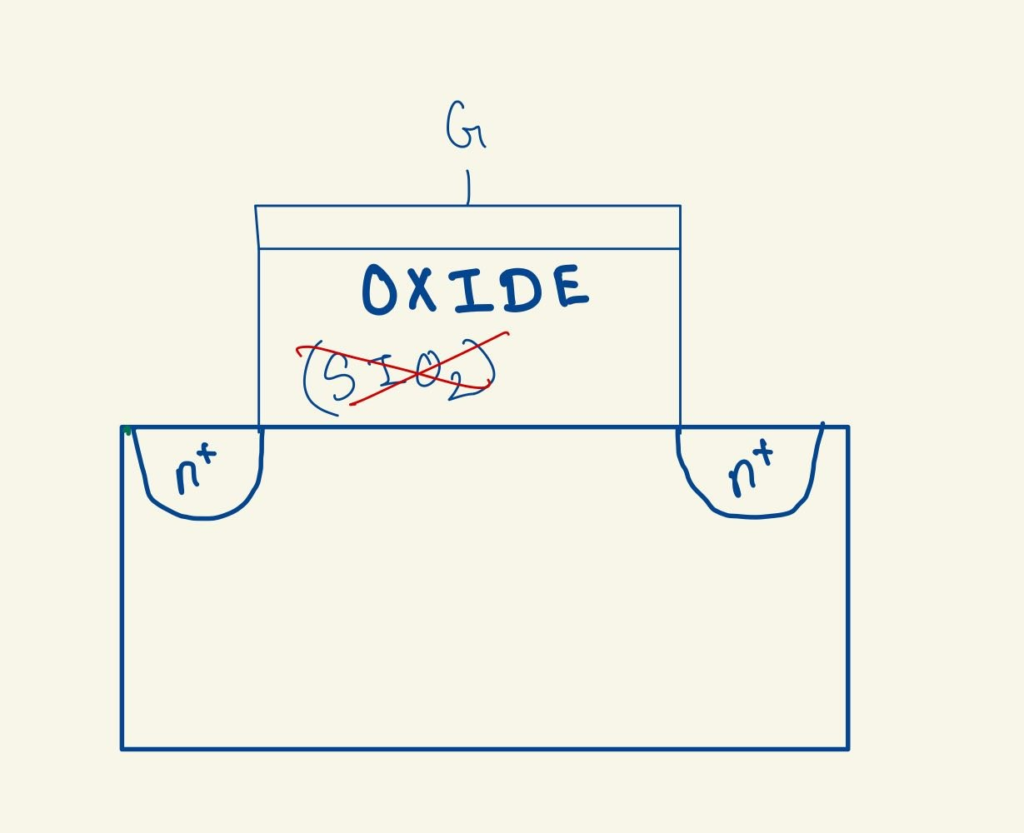
Now to counter the Quantum Tunneling effect, we can’t just make SiO2 thicker; as we increase the oxide layer thickness, we know,
C = epsilon*A / d
Here, d, which is thickness, will increase, which will reduce the capacitance. But we want the capacitance to be constant.
Reducing gate leakage using High-k Dielectrics
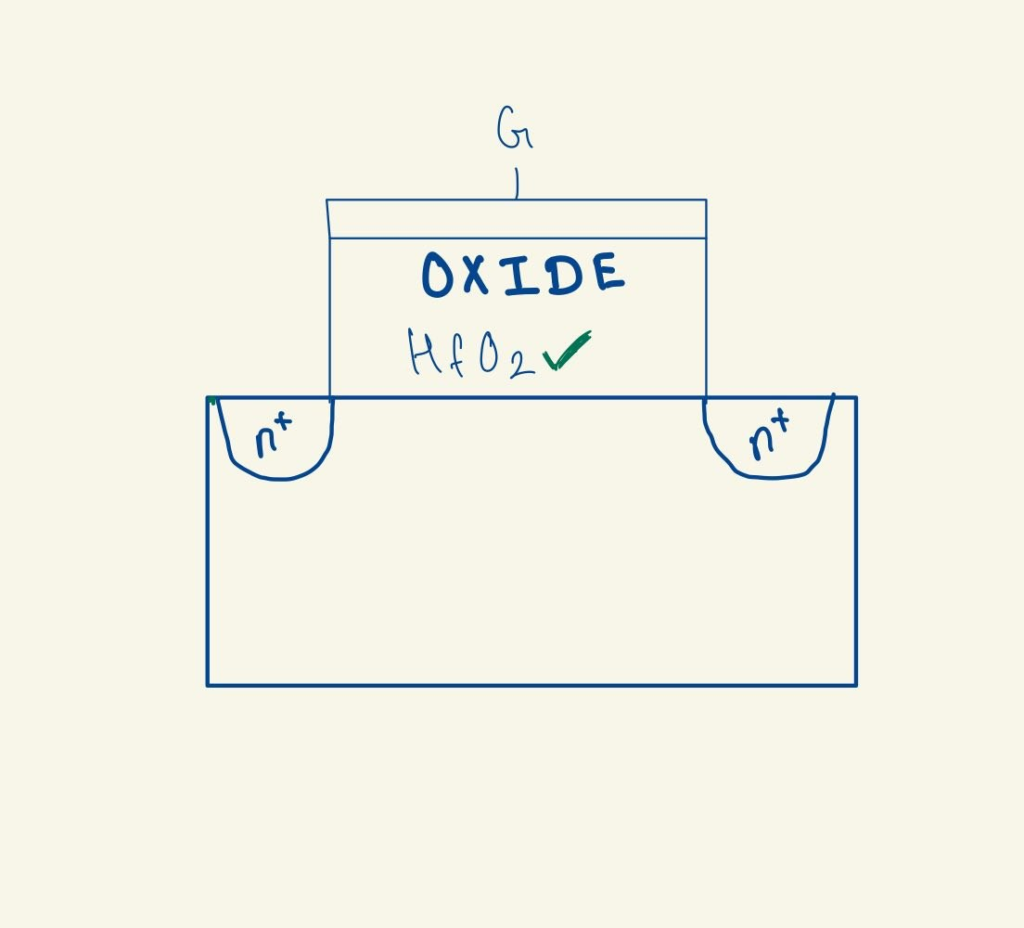
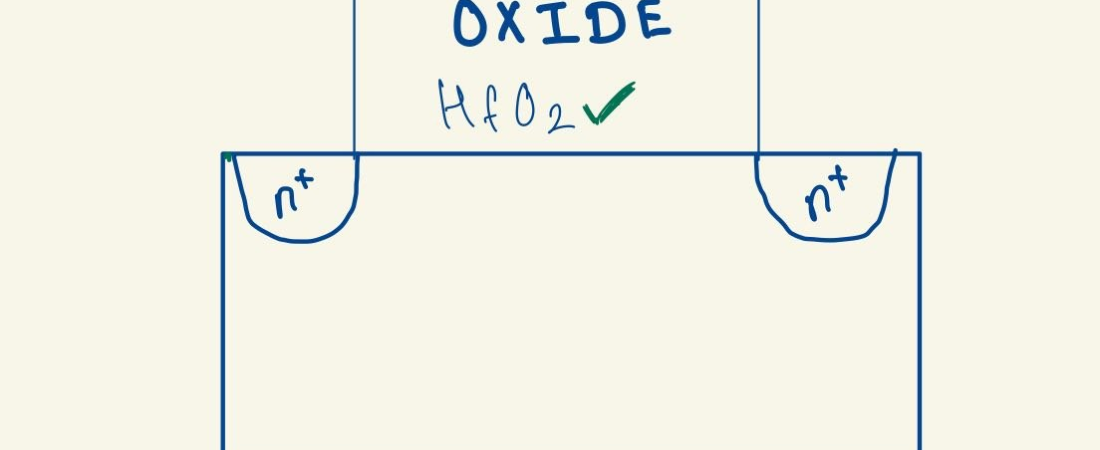
So we change epsilon, which is based on the material. So we use Hafnium Oxide(HfO2), which will increase the dielectric constant, which will increase the numerator, and both will cancel out each other, resulting in constant capacitance. In a way, the higher dielectric constant compensates for the increase in thickness, allowing us to maintain the required gate cap.
Thanks for reading.
For Feedback and more updates, join this Telegram channel: https://t.me/thesiliconpath
- For previous blogs :
- Go to this link: click here
Also you can subscribe from below for future notifications with your email.