In this topic, we’ll learn about a Short Channel Effect called Velocity Saturation in simple terms.
Now,
E = Vds/L
Here, as the channel length L decreases, the electric field increases for the same Vds.
This increase in electric field leads to an increase in electron drift velocity, which in turn increases the scattering of electrons with the lattice. At one point, the electron velocity cannot increase proportionally anymore and starts approaching a maximum value called saturation velocity Vsat.
This is called Velocity Saturation.
Short Channel MOSFET
In short-channel devices, because the channel length is very small,
L decreases –> E increases
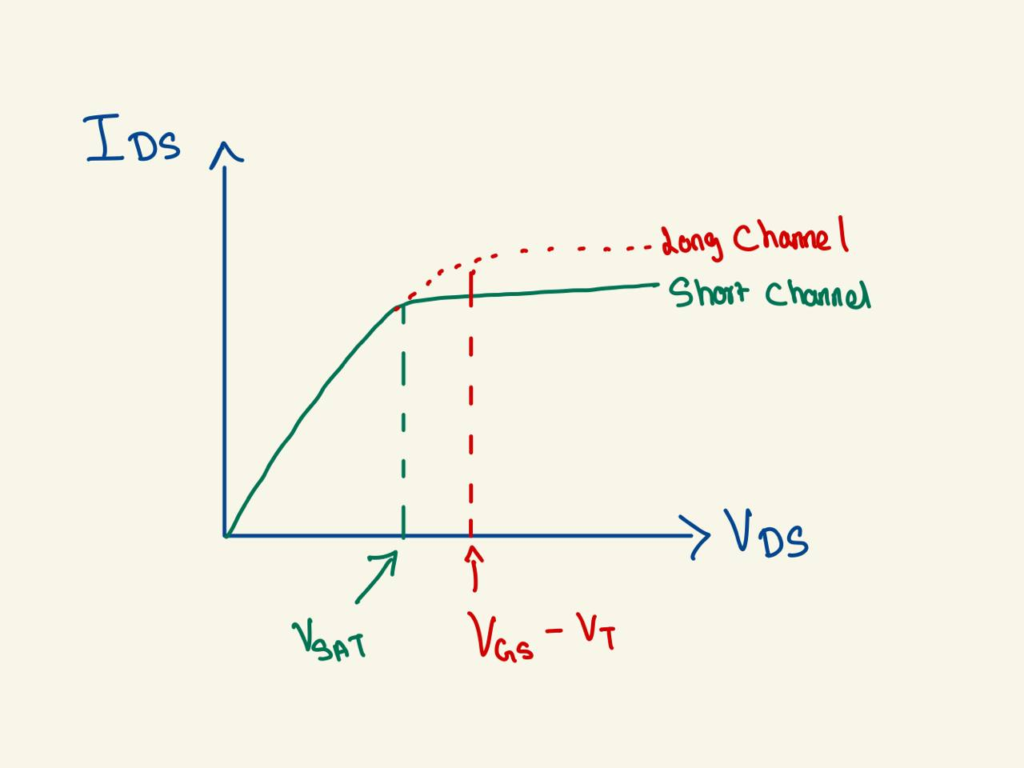
so the carriers can reach velocity saturation at a lower Vds compared to a long-channel device.
Long Channel MOSFET
In a long-channel MOSFET, the saturation we usually study is mainly due to pinch-off at the drain side (click here for understanding it better) when:
Vds = Vgs-Vth
Velocity saturation can also occur in long-channel devices if the lateral electric field becomes sufficiently high, but because the channel is longer, a much larger Vds would generally be required to reach the same high electric field.
CONCLUSION
So in simple terms:
Long Channel:
Vds increases → Pinch-off → Current Saturation
Short Channel:
Small L → High Electric Field → Electron velocity reaches Vsat earlier → Velocity Saturation
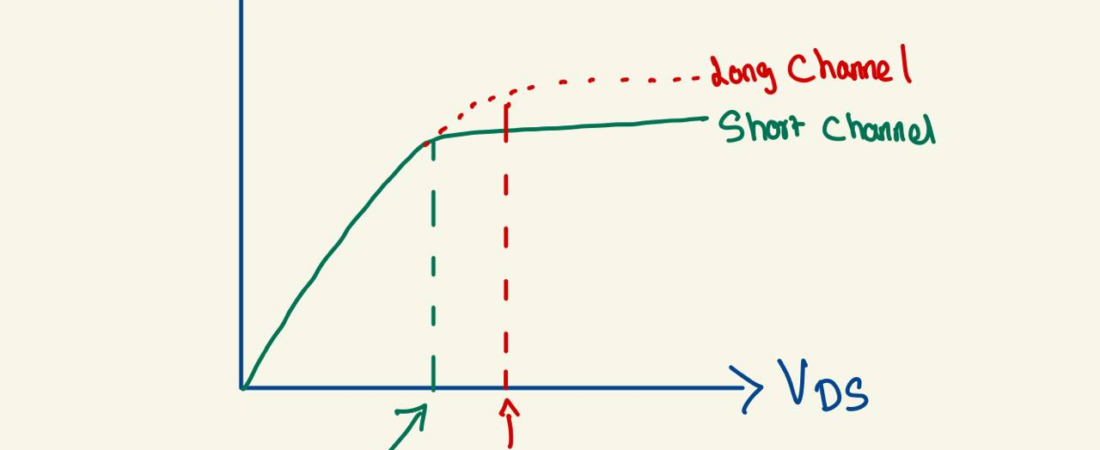
Here’sthe graph for Vsat in Long vs short channel:
Thanks for reading.
For Feedback and more updates, join this Telegram channel: https://t.me/thesiliconpath
- For previous blogs :
- Go to this link: click here
Also you can subscribe from below for future notifications with your email.